Screen every application, not just the first nine
A five minute film: one sentence to an agent, and the whole hiring loop exists. The form, the scoring, the record, the page you decide on, the replies.
The problem
Sixty people apply. Reading one properly takes six minutes, so reading all of them is a working day you do not have. You read nine, and the ones you wanted are already talking to someone else.
The usual escapes do not hold. Skimming means two identical applications get two different answers depending on when you opened them. Handing it to an agency means paying for someone else's taste. And whichever you pick, nothing moves until you personally write back, so the pipeline stalls on you.
How LiveContext solves it
The reading is the part that should be automated. The deciding is not. In this film an AI agent reads every application against the bar you wrote, in your words, and scores it with the reasons underneath. Then the workflow stops, on purpose, and asks a human.
That question reaches your phone with everything you need to judge it. One tap, and the right letter goes out in the right words, and the candidate record updates itself so nobody is contacted twice.
- One sentence in chat builds the whole thing: ten steps, a form, an agent, a table and a review page
- The same thing built by hand, field by field, so you can see there is no magic in it
- A scoring agent with no tools and no browsing, so two identical applications get the same answer
- The run halts at a human approval and refuses to answer anyone until you decide
- A real application goes in through the public form and comes out invited, with nobody typing
Chapters
Transcript
Everything the film says, in order, grouped by chapter. Click a timecode to jump there.
The problem: sixty applied, and you read nine
You posted the role eleven days ago. Sixty people applied. You have read nine of them. The rest are already talking to someone else. There are three ways out of this. Two of them don't really work. Three ways to build it. Stay for the third: thirty seconds, and you build nothing at all.
Method one: describe it in one sentence
Method one. You say what you want, in one sentence. No boxes to drag: you describe the outcome, as you would to a colleague. Then you let go. It reads how this studio hires before deciding anything. It creates the assistant that will score the applications. And it lays the steps down, one after another. The form, the scoring, the record, the page, the decision, the replies. Ten steps. You wrote one line.
Method two: build it yourself, step by step
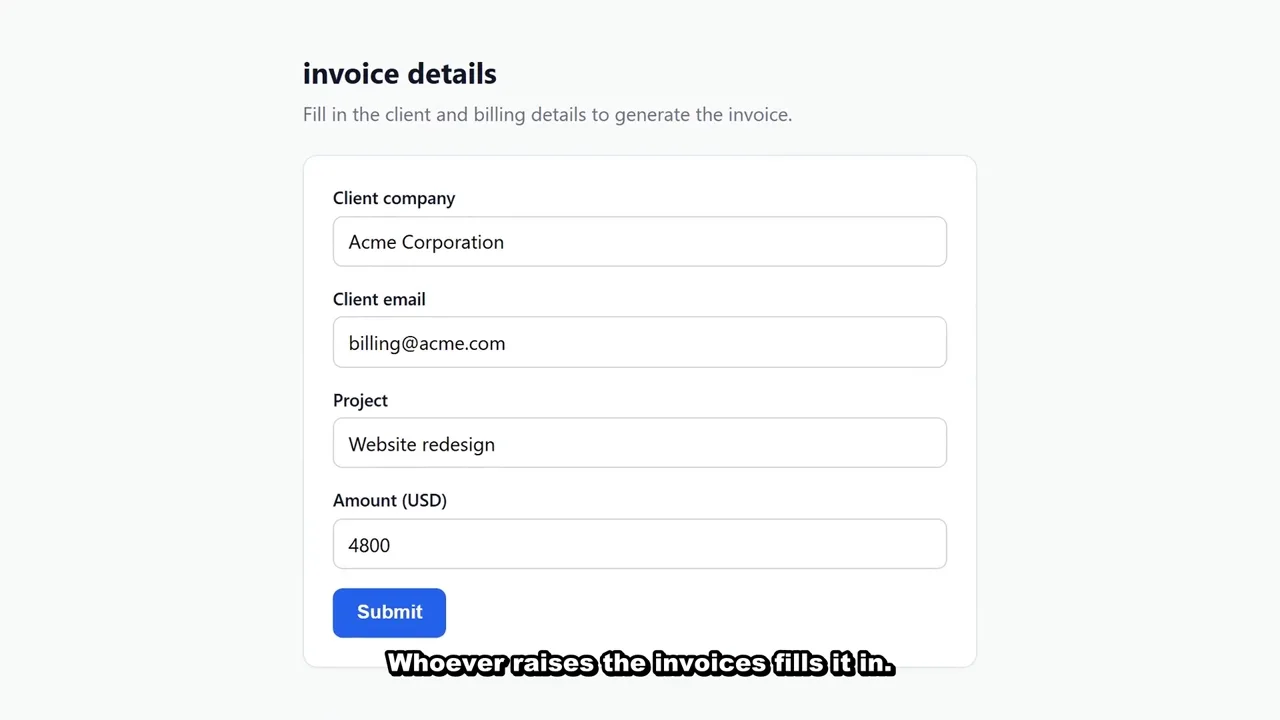
Method two. You build it yourself. Slower, and every choice stays yours. It starts where a candidate does: a form. Pick it, and it lands on the canvas. Give it a title, and a line saying what you want to hear about. Even the button is yours to name. Then the questions, one by one. Name, and where to write back. The role, with only the three you are hiring for. Years. A reel. A photo, if they want. And one open question, where people say the true thing. Now the part that reads them. Not an assistant picked off a list: one made here, for this. It gets a face, so the workflow says who does what. A name, and what it is for. Then how it should think, in plain words. The bar for each role, in your own words. And the model that will do the judging. No tools, no browsing. It decides on what it was given, and nothing else. That is what makes two identical applications get the same answer. Created, and it takes its place in the line. It is handed the application, and asked for a verdict. The verdict comes back as text. So one step turns it into fields we can store. A score, a summary, the strengths, the doubts, a recommendation. Every candidate then lands in the same table. Which table, and which column holds what. Their photo included: a name is not a person. This is the page a human reads before deciding. The same facts, laid out to be read in ten seconds. And here the workflow stops, on purpose. Nothing is answered until someone says yes or no. A week to answer, and her own summary in the question. Yes sends the invitation. In words a person would use, because a person wrote them. And the record is updated, so nobody is asked twice. No sends the other letter, and it is a kind one. Same again on that side: the reply, then the record. Ten steps.
A real application comes in and gets scored
Saved. It is a product now. Now a real application, through the front door. This is the form you just built, on its own page. Noor Haddad. Senior Motion Designer. Seven years. Her reel, her photo, and what she is looking for. Sent. From here nobody touches anything. The assistant reads her against the bar you wrote. Her line is written, and the page paints itself. Seventy-six out of a hundred, with the reasons underneath. And then it waits.
The decision reaches your phone
The decision arrives where you already are. One tap, and the workflow starts moving again.
Approved: the invitation writes itself
Approved. The invitation goes out on its own. The other branch stays dark: only one answer was sent. And her status becomes Invited, without anyone typing it. One application in, one decision, one answer out.
Every candidate, scored and current
Everyone who applied ends up here. A face, so a name is a person. The score it gave, and the years behind it. And where each one stands, kept up to date by the workflow itself.
Method three: install it from the marketplace
Method three. Somebody already built it. Search it, and install. It says exactly what is coming: the app, the steps, the page, the table. Free. One click. And it is yours, ready to run.